
Divergence in the Wild
Talks, tents, and untamed discussions at the ALSO Festival with Robin Ince


I woke up at 5 am to get to the ALSO festival for 9 am, my talk was in 2 hours, and we needed to plan questions and what I was going to say. Two bacon baps, 2L of bug spray and an ugly train nap later, a smiley Robin Ince was waiting for me at the gate. Robin is a brilliant writer and comedian, co-host of BBC Infinite Monkey Cage, and has just done a solid 11-week (110-event) book tour for his new memoir on life and later ADHD diagnosis called ‘Normally Weird and Weirdly Normal’. That’s a lot of legwork. It’s safe to say I cried about 4 times in total when reading it (in a good way).
This is my first time at the ALSO festival, and I have to say, I really enjoyed it. It focuses on music, comedy, art, ideas, culture and wellness. It was a first for me, especially considering my drive-by effort at ‘Beach break’ in 2011, where I lasted no more than 18 hours (Not my choice, but I was young and my friends said it was the best thing ever). I even had multiple panic attacks, got caught in a mosh pit and only had money for a small pie as my last hurrah. (I actually speak about this in ‘Explaining Humans’). For me, ALSO was the opposite.
The vibe at ALSO? It was a beautifully laid out field, tents at the top, and stages, books and food at the bottom, where sun-kissed people were lying on river banks and many were going for a wild swim to cool down from the scorching heatwave. No one was off their face, or holding whiskey from bin bags, no urinating in bushes, since unlike other festivals, navigating porta-loo toilets was not considered an extreme sport. There seemed to be enough of everything for everyone, so no Hunger Games. If anything, it was as much of an entertainment and chill camping retreat as it was a festival. I was even partially annoyed that I forgot my bikini for a wild swim!

Questions from the talk!
In the end, Robin and I covered a lot in our conversations! We spoke of many subjects, which the audience asked questions about throughout, and I have just about remembered what our answers were.
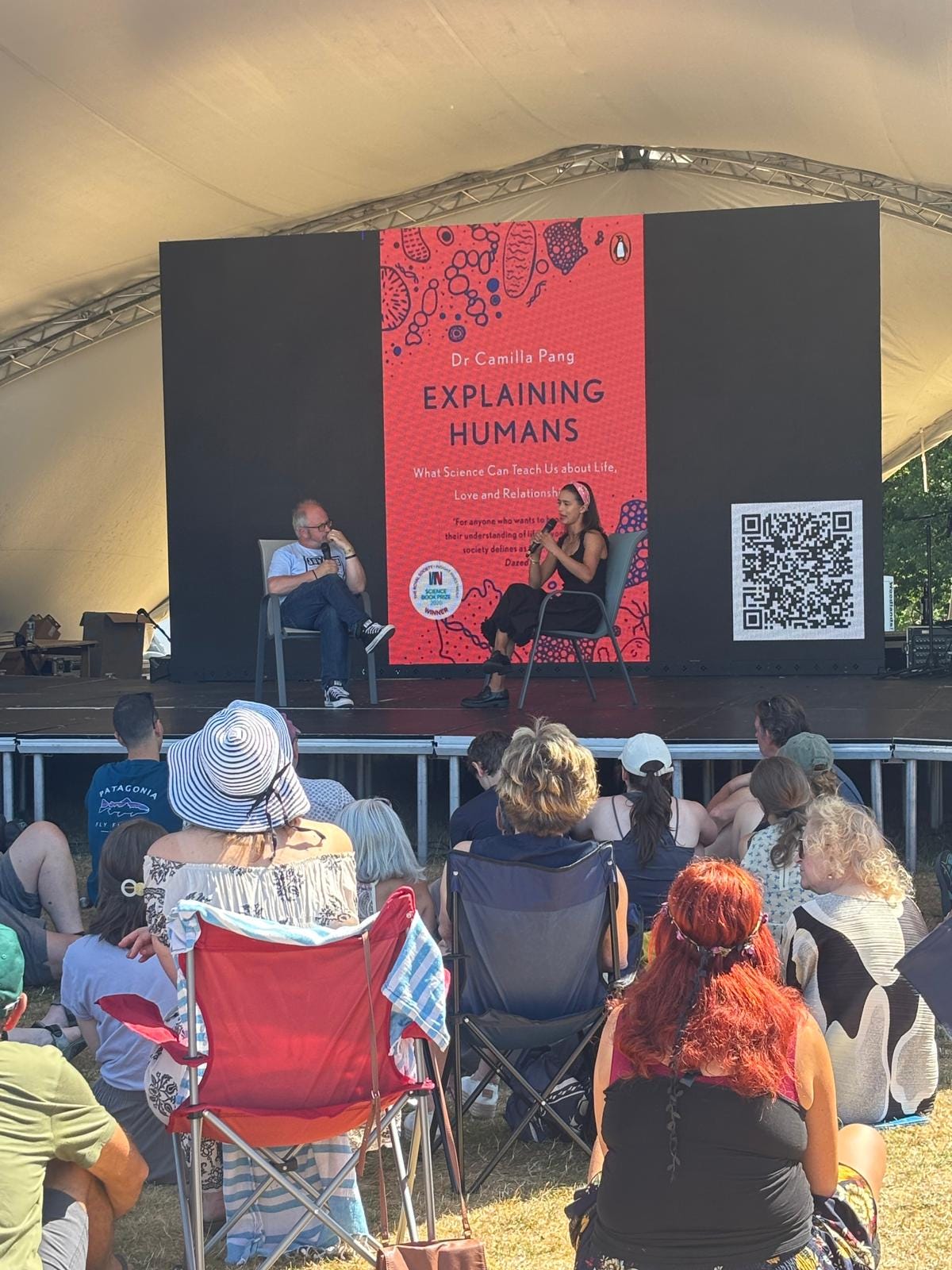
Demand avoidance in book writing
Having a plan was crucial, but at the same time, for many NDs, the minute you make the structure that you need is exactly when you get bored with it. 🙃 My solution to this is not to plan about what you want to write about but think more about how you want to make people feel reading your chapters. Then the science and everything (e.g anecdotes) fall in later. It keeps it focused enough to be ‘relevant’, but open enough to be on the edge of interest, where you can always keep building. You may even find yourself having too many notes! 😱
How to avoid demand avoidance when starting a book?
Firstly, writing a book never formally starts with me because I am always writing small notes to myself via WhatsApp, email, and post-its, which eventually puzzle together to make a mental castle, also known as a book. 🏰 Take note, literally.
I tell myself I have already started writing the book. I call this ‘Jinxing the jinx’. 🃏, the joke’s on you, but you want it to be. Instead of feeling daunted by your own decisions, acknowledging that you are partly the way through makes it easier to start again. You are already partly up the hill, may as well do a bit more.
Tell yourself you are writing something else, and give yourself permission to exist in the in-between and be fluid. F*ck this whole ‘focus on one thing’ mentality to legitimise your time, that won’t cut it and being in the middle lets you swim between the two and create. Like my partner, Joe, who went for a “quick dip” in the lake (in his boxer shorts) 🌊 ⬇️ .
ND Brains
The tendency of the ND brain to have lots of different and ‘unrelated’ fads is often seen as ‘scatty or unfocused’.
I find this hilarious because ‘everything is related’ on some level. Literally and also intellectually, it’s only scatty for the people who can’t see the links. Who’s to say these topics aren’t connected in the minds that make them? Humans love a link. After all, why do you think the Wikipedia game ‘WikiRacing’ is such a hit, where you navigate between two unrelated pages using only internal Wikipedia links? e.g a race to go from ‘Monkey’ to ‘Chocolate’. 🐒 🍫
This inconsistency can cause people around us to question whether our experience is real, since we can differ in how we respond to the world. But if there is one thing that is for sure, is that we are very consistent and adamant in defending justice and our values.🧠🙏 I’d rather it this way round to be honest, even if it means we learn differently (as I write about here).

So, the next time you have a hyperfocusing island, keep having them, in fact, have so many more of them you have no choice but to connect them until the ‘doom room’ is full (as Robin describes as a graveyard of hobbies and books). Because at some point, the links will form themselves. Much like islands of thought connected to the sea, these fads, hobbies and disciplines were all created by the Pangaea of our internal human experience.
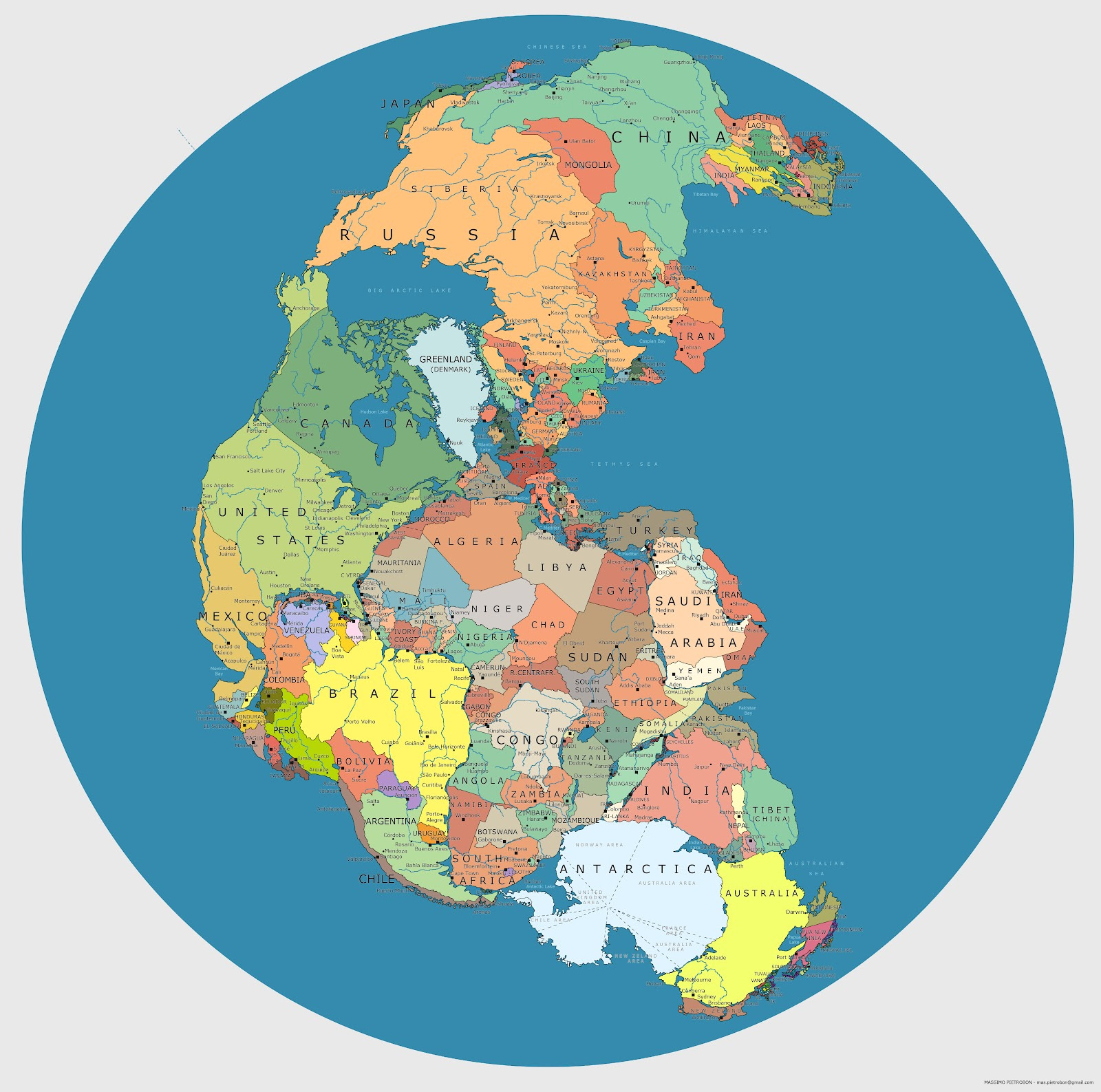
A note on inter-disciplinarity (aka not thinking through silos):
Specialisms are often fetishised as a form of moral purity, legitimacy and superiority, aka “You can be this OR this”. But not only is this outdated by encouraging silos and narrow problem solving through a single discipline ( ironically not good for complex problems), it also doesn’t make you that fun down the pub. 🤡
Many ND brains don't see life as a set of skills or specialisms but will naturally go to great lengths to stitch disciplines together to solve a problem we care about. Yes, we are already in Pangaea mode. 🌍 We start from 1000 not 0, remember? Why force yourself to be 1D when you are a 3D thinker, just to people-please?

Experiencing glitches
Robin and I both experience ADHD "glitches", which refer to moments when thoughts seem to short-circuit or scatter, often appearing unfocused or erratic to others. ⚡️ In reality, this is the brain rapidly simulating a web of possible outcomes, both related and unrelated to the current scenario, pretty much at the same time. They come in the form of intrusive thoughts, but also in great ideas. It’s hard to tell which is which. So even if it's uncomfortable, you let it happen because a part of you is preparing for interruption and parts of yourself you want to let in, even if not formally invited.
It’s not a lack of focus but a hyper-connected processing style where attention shifts across timelines, details, and potential futures. These mental jumps can look like confusion or distraction, but they're often the result of running too many "what if" scenarios at once. It’s dopamine, it’s distraction, it’s focus and everything in between. I highlighted that it’s important to be patient with yourself and to give yourself the grace to respond. Since trying to stop these glitches (even with more glitches) doesn’t work, nor does it make you more focused, you just feel half present and sad. Trust me, I have tried.
What does sleep look like for ND minds?
Unlike my neurotypical partner, my immediate answer to any sleep-related question is ‘No’.
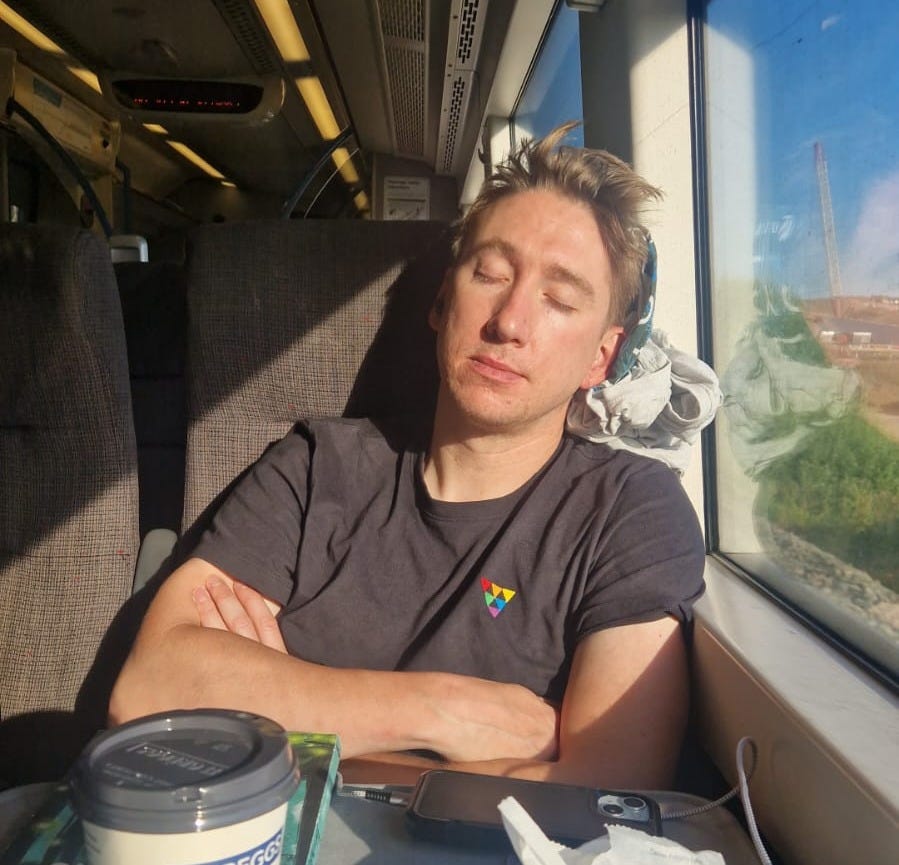
Myself and many other ND minds experience demand avoidance to sleep and find it hard to settle, or often have unexpected night terrors. I also mentioned that when I work to my rhythm, I feel a lot better and can sleep. However, even if I gym after a 9-5 job (in a chair), I will wake up at 2 am and 4 am panicking. Knowing your rhythms beyond ‘the rules’ is essential for getting the stars to align for slumber.
How diagnoses are missing a trick.
Pretty much all of the neurodivergent diagnoses are defined based on how they impact neurotypicals and not the internal experience of neurodivergent brains themselves. This is a lot more important than people realise because if we want to characterise experiences in a ‘descriptive way’ on what they are, we need to not tell people ‘what they should be’, prescribed by everyone else’s opinion who doesn’t share it. We all agreed that having someone tell you how to be Autistic isn’t exactly a pillar of inclusion, it’s inaccuracy dressed up as care. Think about it, just try and make a recipe for a specific cake based on how people taste it:
“It’s kinda buttery but also spongey, it’s sweet, has jam inside, it’s great with tea, but not so much gravy.” 🎂
It has no bearing on the constitution or ingredients for the cake. Not sure about you, but I couldn’t make the precise cake from that (I’d give it a go though). As much as I love a good sponge 🍰, I also like first-hand data. Diagnosis should reflect this more.
So when you are trying to get to know your experience or diagnosis, start from there, get to know your glitches and act like you have already started. Try to forget about what other people think your Autism/ADHD is. Because those who know the gig won’t question you for not being ‘neurodiverse’ enough, but will have empathy for how you exist. Next thing you know, you’ll be speaking for hours. That’s the real centre stage.
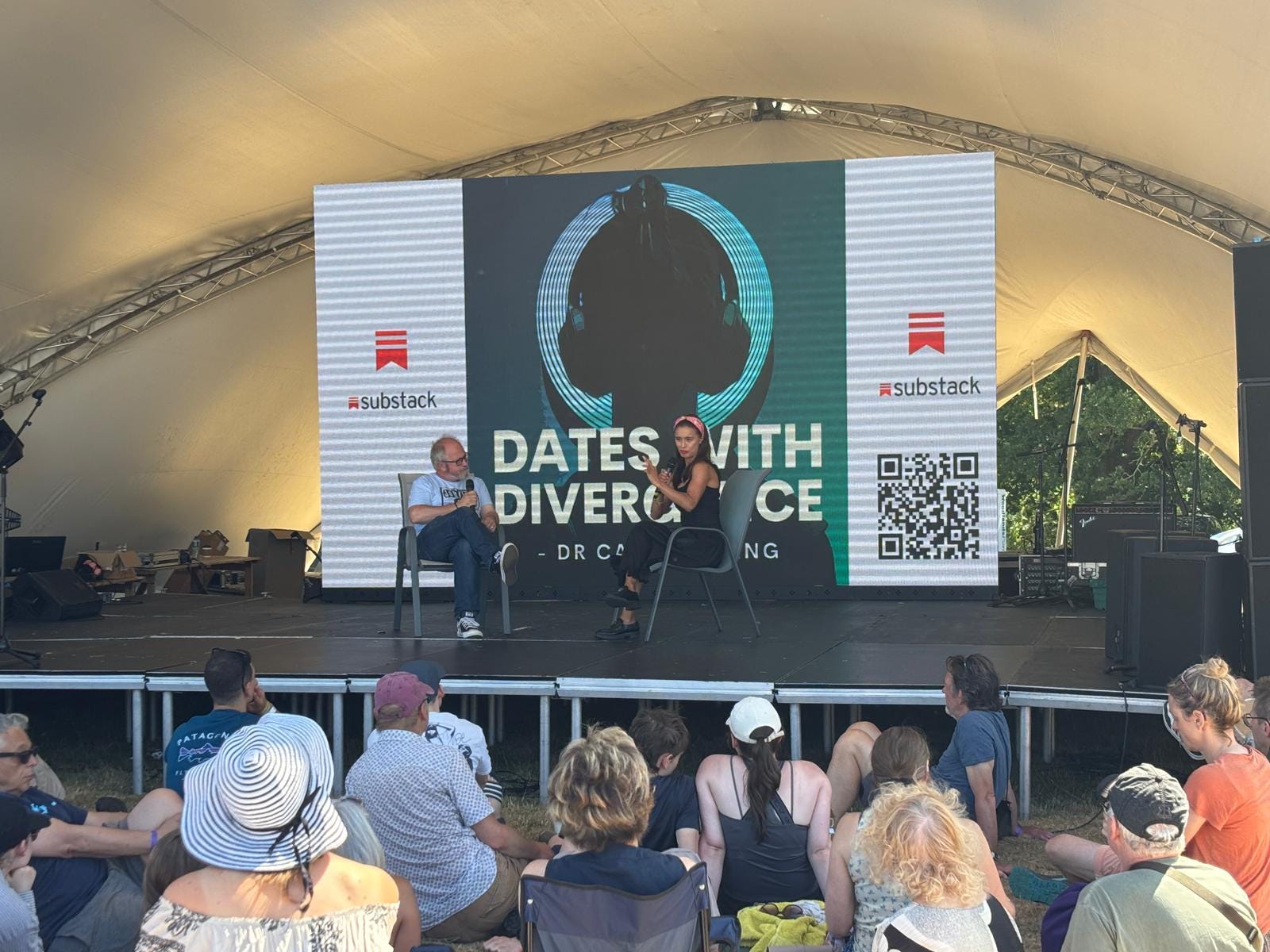
Thank you to everyone who came to the event, and all of your great questions ✨❤️
Thanks for reading ‘Dates with Divergence’ 🚀 I’d love to hear your thoughts - feel free to like, comment, and share your own pivot stories. Let’s keep the conversation going - drop your thoughts, share your pivots, and stay tuned for more. ✉️
 | A guest post by
|